Kirill Maslennikov: How We See the Universe
About the Lecture
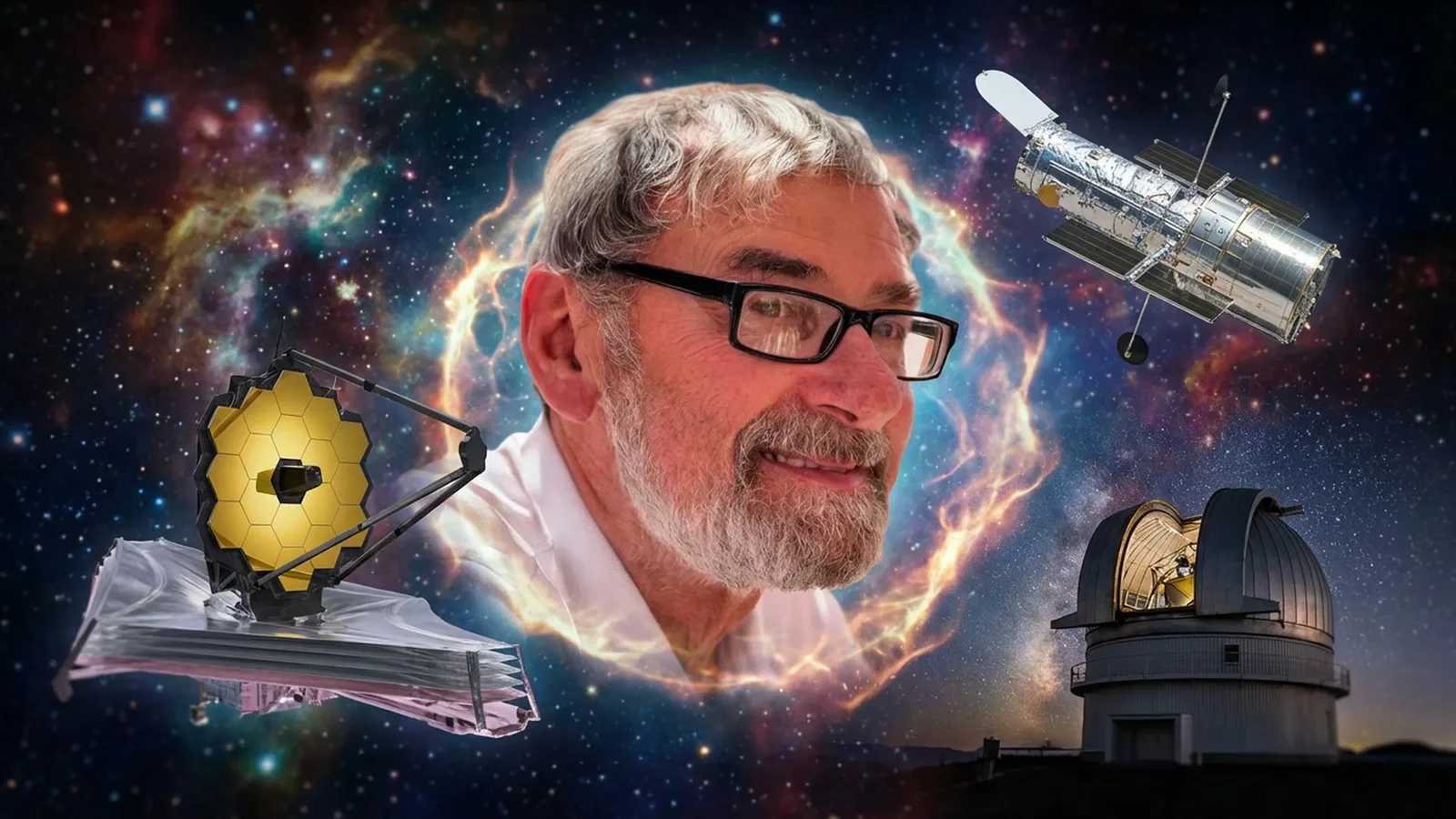
Since ancient times, the telescope has been a metaphor for knowledge: the farther we look, the more we understand. Today, astronomical telescopes are no longer just the “eyes” of science — they actively transform our perception of reality. They don’t merely capture images; they allow us to see what the human eye could never perceive.
Modern telescopes shape mirrors in real time, create “artificial stars” with lasers, compensate for atmospheric turbulence, combine data from multiple observatories, and assemble images from signals that aren’t even light.
Kirill Maslennikov will guide viewers through the key scientific and engineering breakthroughs that made this possible. The focus is the Simonyi Telescope at the Vera Rubin Observatory, but the talk spans far more: segmented mirrors, adaptive optics, interferometry, and even gravitational-wave detectors. We’ll explore both the technology and the philosophy of a “new vision.”
A special focus will be on the invisible spectrum: how the same galaxy appears in infrared, radio waves, X-rays, and gamma rays. This visual exploration not only captivates the eye but also reveals how deeply our view of the universe depends on how we look.
Similar events
Ovanes Akopyan: Magic, Astrology, and the Quest for Harmony